
Steps you can take to ensure you are prepared for your API-653 tank inspection.
If you own liquid storage tanks, you already know regular API 653 inspections are part of protecting your investment. An inspection from Heartland Tank Services will help protect your tank from corrosion, distortion, and structural integrity.
This guide walks through the API 653 inspection process from start to finish. It’s built to help you:
Prepare for your inspection;
Set your expectations during the inspection;
And finally, explain the results you will receive.
We'll give you a clear picture of where your tank stands and what comes next.

When Should You Schedule an Inspection?
Heartland Tank Services adheres toThe Fertilizer Institute’s recommendation of a formal API 653 tank inspection every 5 years.
This schedule generally covers all state and insurance requirements. Heartland Tank Services keeps track of all state inspection requirements and will gladly help you determine when your state laws require an inspection be completed.
The API 653 Standard also requires routine monthly external in-service “Walk Around” Inspections.These inspections are conducted by the tank owner, leaving the scheduling up to the needs and uniqueness of each tank operation.
If you own a tank with an internal liners, Heartland Tank Services also recommends a weekly leak monitor check.
Cleaning Your Tank Prior to an Inspection
Fertilizer product is corrosive and gradually eats away at the containment walls of a tank and slowly degrades a tank’s structural integrity. It also leaves behind hardened scale deposits that often conceal corrosion damage beneath.
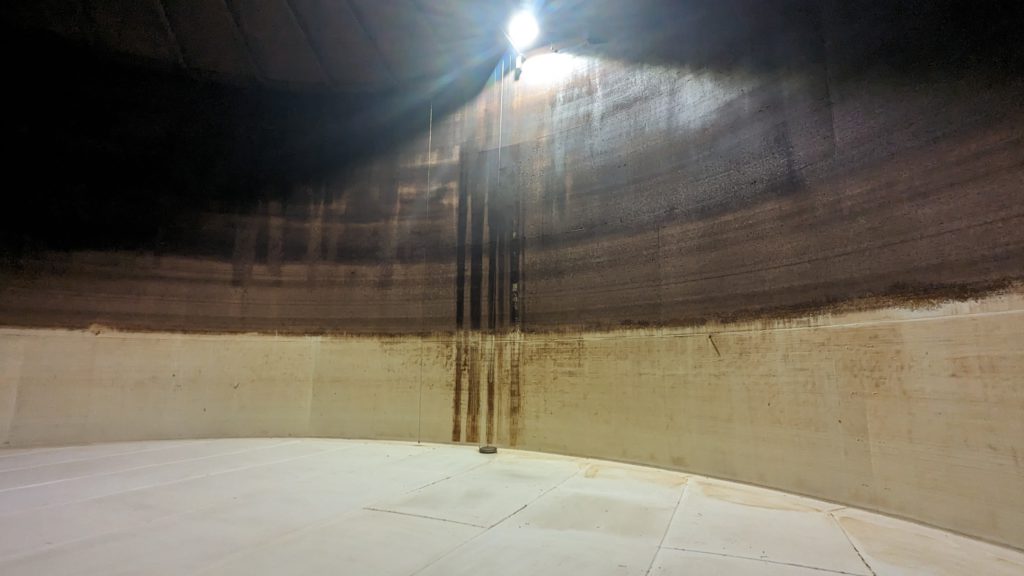 It is vital that damage and degradation is noticed during inspections. To ensure this, it is crucial that a tank is properly cleaned prior to an inspector coming on site. In addition, cleaning disrupts the corrosion environment, buying more time in your tank’s life by causing the corrosion process to reset and restart.
Do it yourself cleanings are used to keep costs down. The drawback to this approach is the tank may not be cleaned to the specifications required for an inspection. The tank may be cleaner than before, but not clean enough to inspect. This may also cause unnecessary tension between the inspection team and tank owner if the inspector is unable to perform an inspection.
Professional cleanings are the standard recommended by Heartland Tank Services. These teams have the knowledge and specialized skill to thoroughly clean a tank for an effective inspection. While the cost is significant, it is less than the cost of unplanned downtime. Small expenses don’t immediately explode into large expenses.
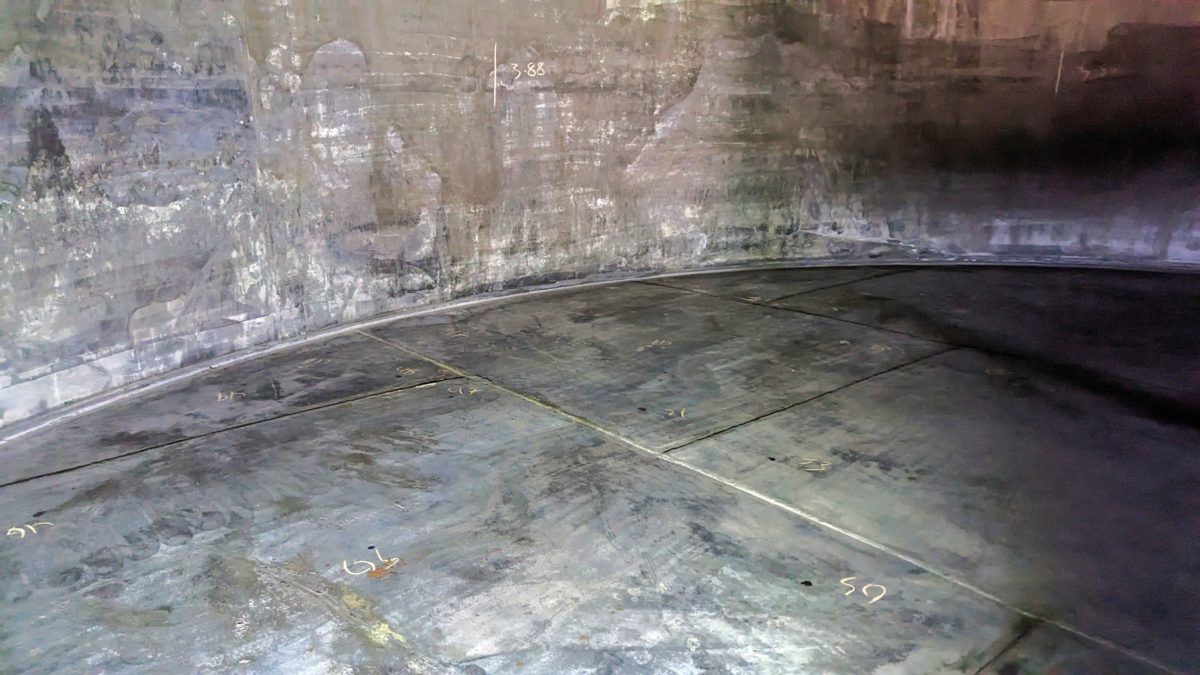
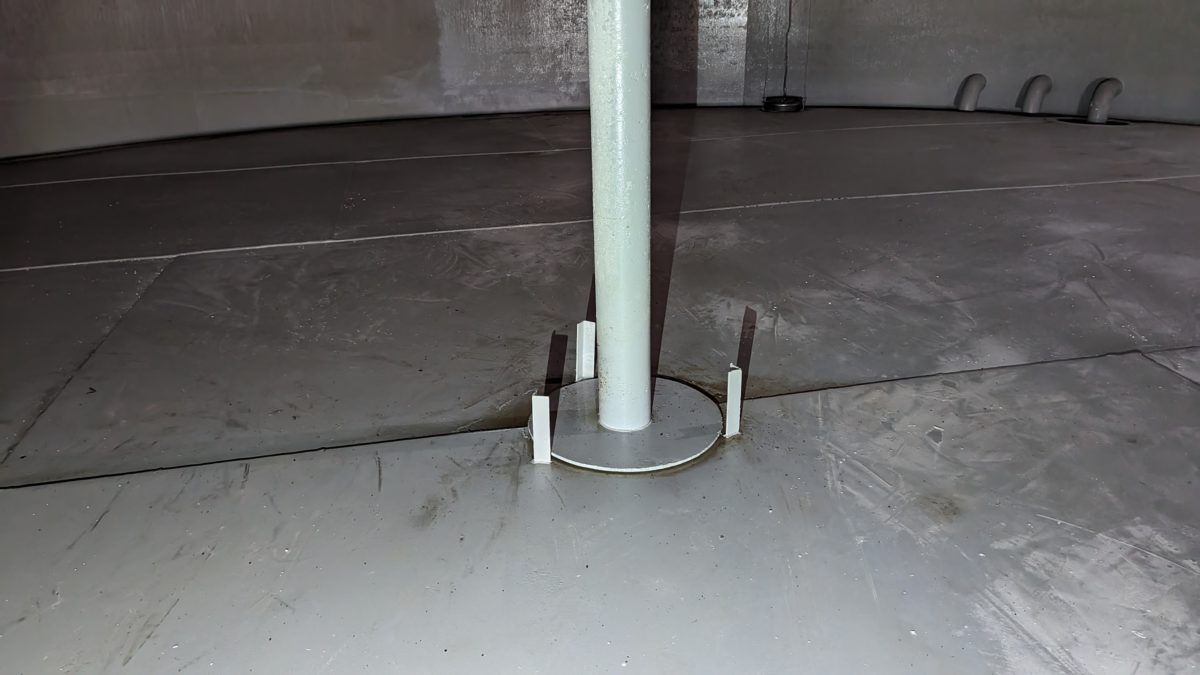
What Does a Clean Tank Look Like?
To give tank owners a stronger idea of what constitutes a tank that is properly cleaned, examples from past inspections have been included.
Examples of clean tanks
These tanks are properly and thoroughly cleaned and ready for inspections.
What Does an Improperly Cleaned Tank Look Like?
The cleaning for these tanks is not thorough and complete. If your tank resembles any of these examples, your tank is not ready for an effective inspection. Crucial flaws and failures may not be located.
Remember, if we can't see it, we can't diagnose it!
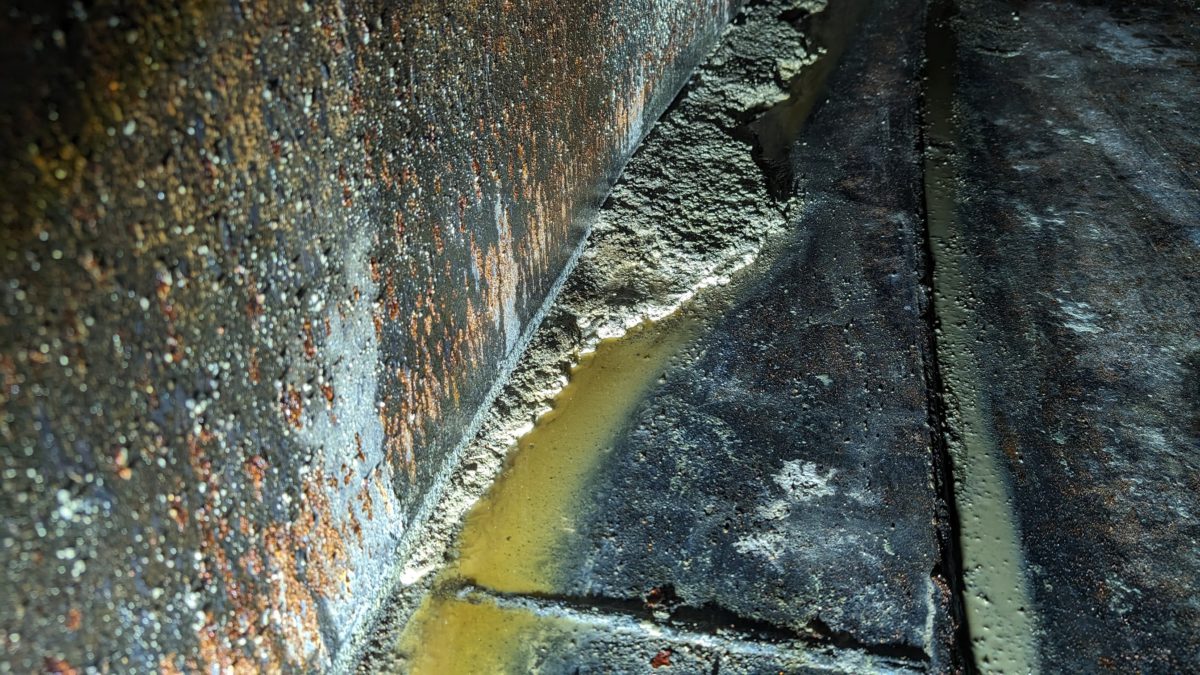
Excessive scale build up along the inside chime well. This is considered a critical zone of the tank due to it being the highest pressure area inside the tank.
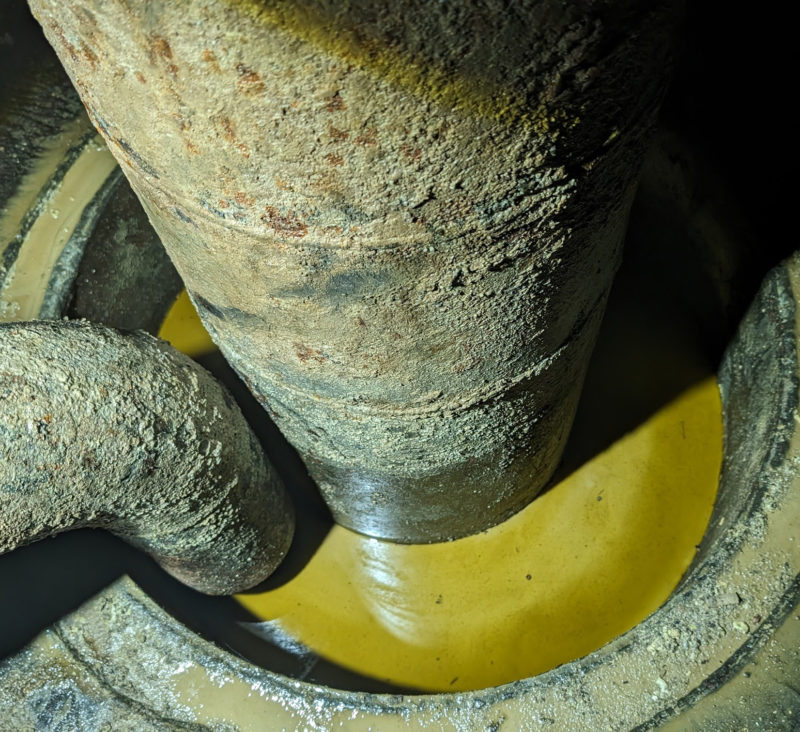
Product still remaining
in floor sump

Liquid still present in the weld seams
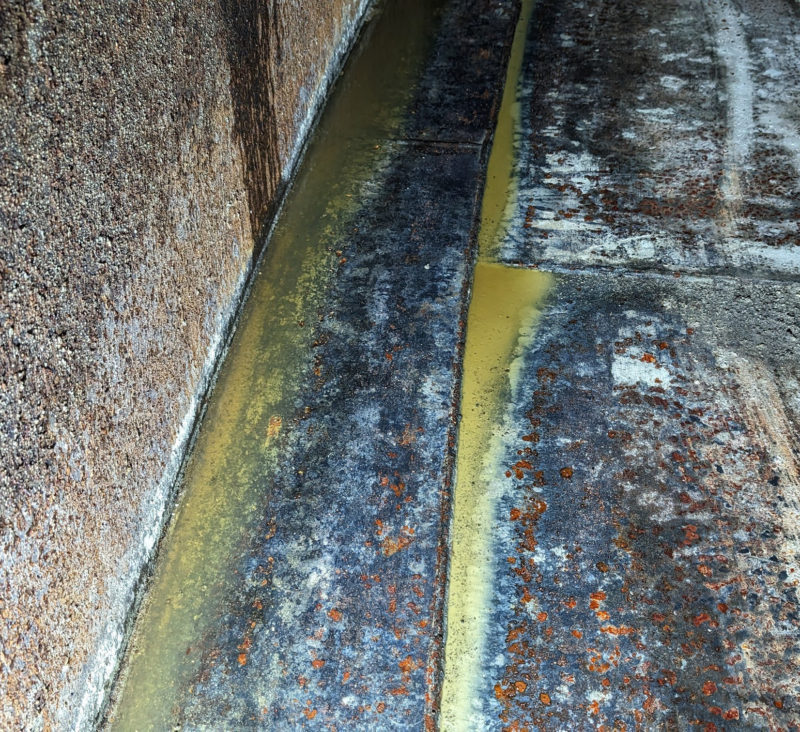
Liquid still present in the weld seams
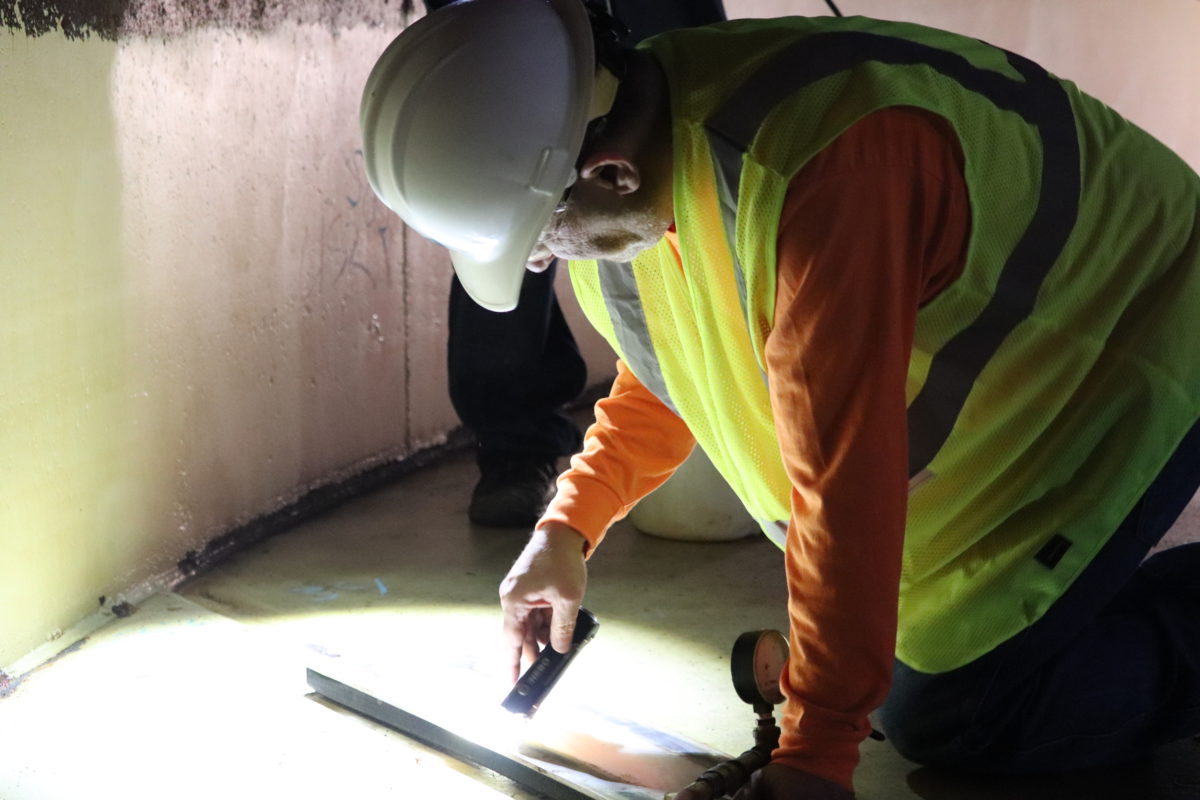
What the Inspection Team Will Look For
To keep your tank in strong working condition, the inspection team will examine the tank and foundation for the following:
- Evidence of leaks
- Shell distortions
- Signs of settlement
- Corrosion
- Condition of the foundation
- Condition of the paint coatings
- Condition of any insulation systems
- Condition of appurtenances
Performing these inspections will save tank owners money. They detect issues in their infancy when repairs are smaller, easier, and less expensive to remedy.
The earlier the problem is caught, the less time the tank needs to be out of service to perform the repair. Diligence and organization are critical in maintaining a routine inspection schedule, but the effort is rewarded with lower repair and operation costs.
Components of a Formal Inspection
For a Formal Out-Of-Service Inspection, the basic components to the inspection should include:
- Internal and External Visual Inspection of All Welds, Plates, Appurtenances, and Coatings
- Ultrasonic Thickness (U.T.) Testing of Shell Courses, Floor, and Roof
- Vacuum Testing of All Floor Weld Seams, Unless Epoxy Coated
- Settlement Survey to Check for Planar Tilt and Floor Bulges/Depressions
- Inspection of Repairs to Verify Compliance with API Specifications
- Calculations for Safe and Maximum Fill Height
What to Expect From Your Inspection Result
At the conclusion of such inspections, the inspector should provide you with an inspection report that includes:
- Executive Summary Describing the Activities Performed with Summary Conclusions
- Tank Data Page, Including Maximum and Recommended Fill Heights
- Detailed Discussion of Observations and Recommendations for Foundations, Shell, Roof, Floor, Appurtenances, and Ancillary Equipment
- Overall Recommendations on Repairs
- Engineering Calculations for Remaining Shell Life, Settlement Survey, and Remaining Thickness for Floor and Roof
- Log and Mapping of All U.T. Readings
- Pictures of Tank and Areas in Need of Repair or Monitoring
- Non-Destructive Examination and API-653 Certifications
Additional API-653 Tank Inspection Resources
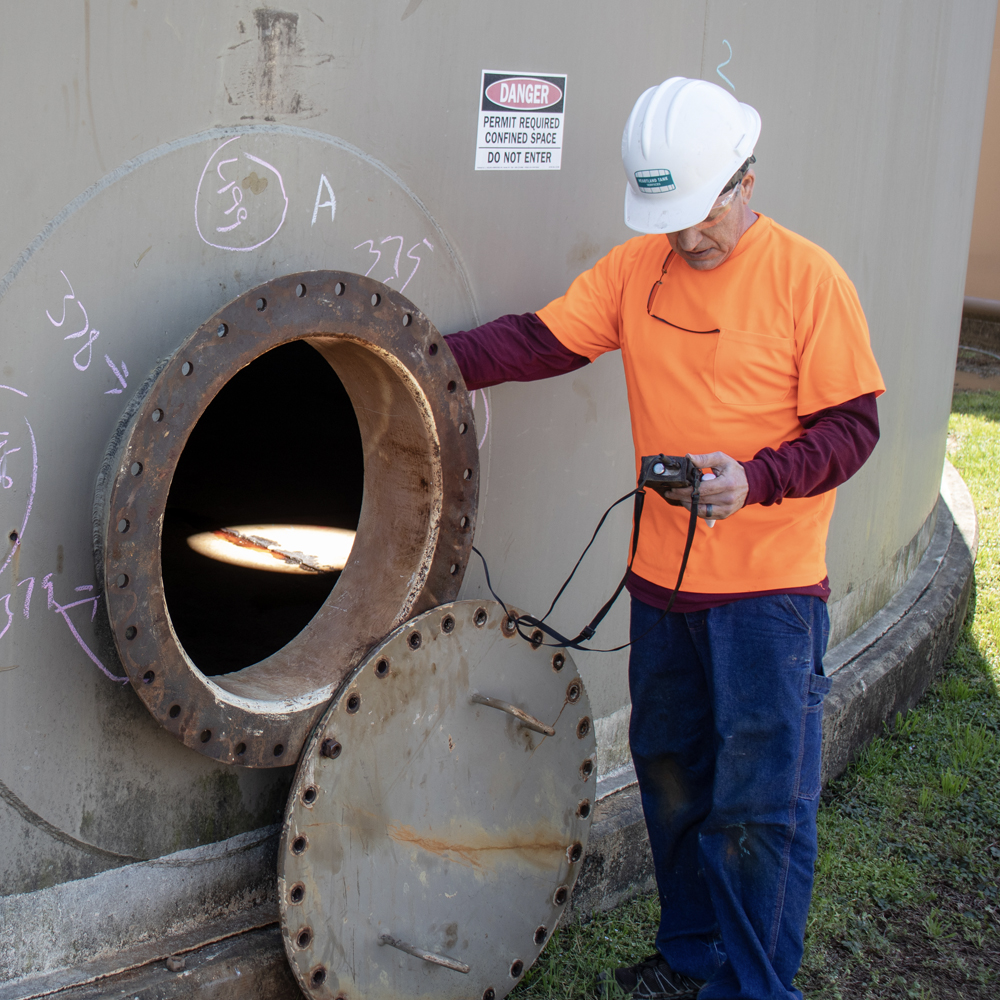
Learn more about what a Heartland Tank Services inspection means for your business by reading any of these inspections-focused articles.
What the API 653 Standard is and What it Covers

What the API 653 Standard is and What it Covers

What the API 653 Standard is and What it Covers

What the API 653 Standard is and What it Covers

What the API 653 Standard is and What it Covers
What the API 653 Standard is and What it Covers
Do You Have API- 653 Inspection Questions?
- Are you preparing for an inspection?
- Do you wonder if your tank is clean and ready for our team to come on site?
- Do you need help scheduling a professional cleaning?
- Have you received a report and have questions on your next steps?
Contact our Inspections Team with any and all questions.

Rick Buntt
API 653 Inspector
rbuntt@heartlandtankservices.com
800.774.3230 ext 111

Jennifer Selke
Inspection Division Coordinator
jselke@heartlandtankservices.com
800.774.3230 ext 103